

Yacht Charter in Spain
1,600 km of Mediterranean coast plus the Balearics and Canaries — Catalonia, Ibiza, the Costa Blanca, and year-round sailing across every style.
- 172yachts
- 23bases
- From $68per day
- Avg $278per day
Featured Boats in Spain
Recommended for relaxing charter vacation with friends or family.


Top Yacht Charter Destinations in Spain
4 charter regions in Spain.

Balearic Islands
The Balearic Islands offer clear-water cruising between Mallorca, Menorca, Ibiza and Formentera, with sandy anchorages, limestone cliffs and busy harbors such as Palma, Mahón and Ibiza Town. Summer sea breezes are reliable, while many coves provide sheltered overnight anchoring.
- 147 yachts
- Starting at $68/day
- Average $292/day
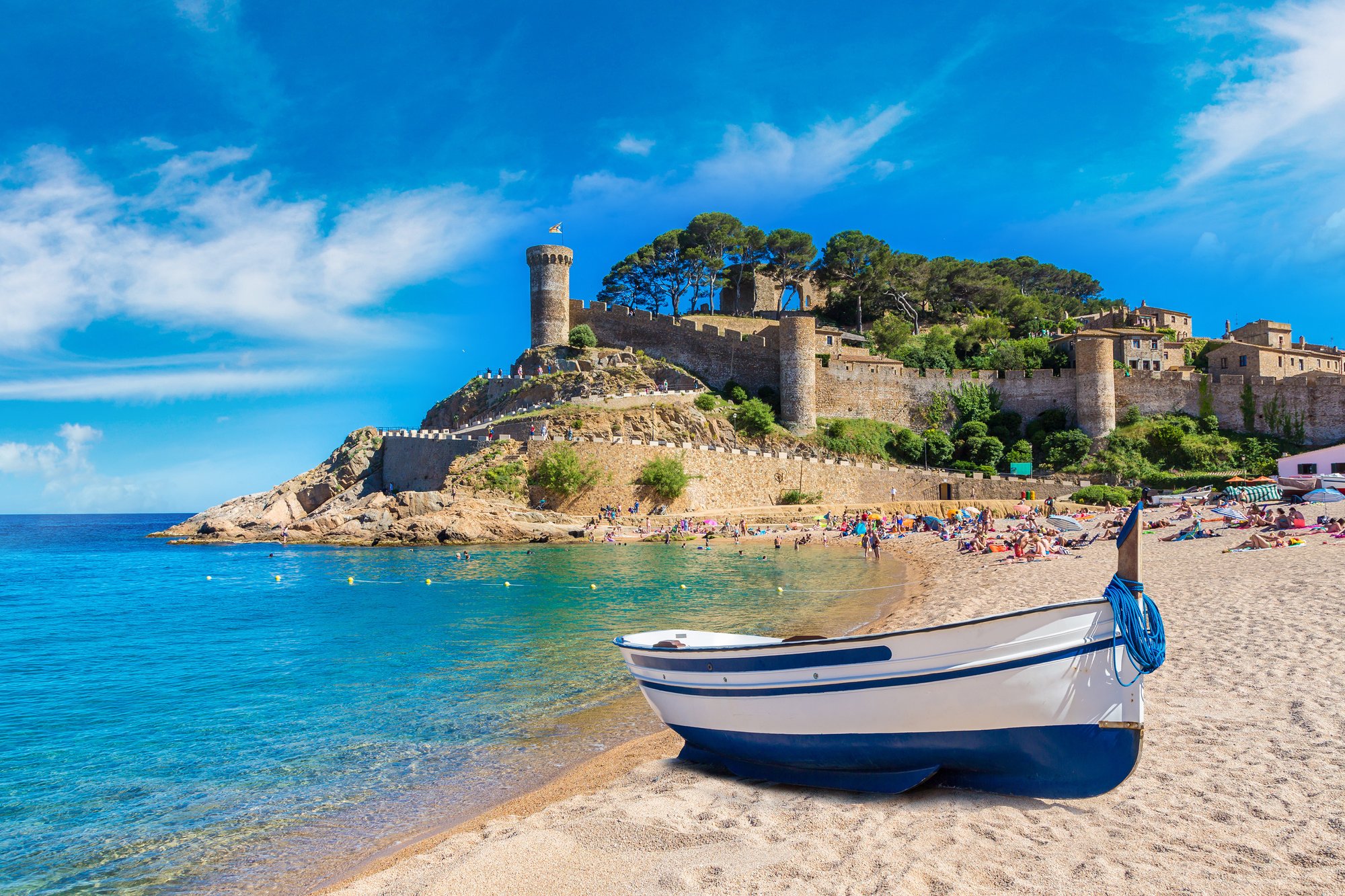
Catalonia
Catalonia offers rugged Costa Brava coves, pine-covered cliffs, and city stops in Barcelona, Sitges, and Palamós. Anchorages around the Medes Islands and Cadaqués are common. Summer sea breezes give reliable afternoon sailing, while many bays provide good shelter from the northerly tramuntana.
- 11 yachts
- Starting at $106/day
- Average $184/day

Canary Islands
Volcanic islands with black-sand coves, clear water and dry hillsides. Typical stops include Tenerife, Gran Canaria, Lanzarote and La Gomera, with anchorages at Playa Blanca and Las Palmas. Trade winds give steady sailing, while larger distances make inter-island passages feel more open-water than coastal.
- 8 yachts
- Starting at $140/day
- Average $204/day

Alicante
Alicante offers sheltered Mediterranean cruising along the Costa Blanca, with sandy bays, limestone cliffs and clear water. Key stops include Alicante city, Altea, Jávea and the Isla de Tabarca anchorage. Summer sea breezes are steady but moderate, with reliable shelter in most harbours.
- 6 yachts
- Starting at $173/day
- Average $220/day
Yacht Types Available in Spain
Browse by what you want to charter.
Charter Types Available in Spain
Choose how you want to sail. Read our guide on bareboat vs crewed →
Bareboat Charter
You skipper the boat yourself. Full freedom over the itinerary, lower cost, requires a valid sailing license and VHF certificate.
- Skipper yourself with a valid license
- Full itinerary control
- Lowest cost option
Crewed Charter
Sail with a captain — no sailing license required. Includes both all-inclusive crewed yachts (captain plus optional chef and hostess) and bareboat listings where a skipper can be added on request.
- Captain handles navigation
- Local routes planned for you
- All-inclusive crew or add-a-skipper
How Yacht Charters in Spain Compare in Price
Average daily yacht charter price across popular destinations. Click a country to explore.
Frequently Asked Questions
When is the best time to charter in Spain?
The best time to charter in Spain is May through June and September, when Mediterranean Spain typically sees about 75°F to 84°F and more reliable sailing conditions than the height of summer. July and August are the hottest months at about 90°F, and July is also the peak pricing month at $597 per day, so they suit travelers who prioritize peak-summer weather over value. If you want to sail outside the main Mediterranean season, the Canary Islands are Spain’s best year-round option, though conditions can be windier than a summer charter in the Med.
How much does a yacht charter in Spain cost?
The cost of a yacht charter in Spain starts at $101 per day, with a median charter rate of $286 per day. Late April - early May are typically the cheapest months for practical sailing starting at $196 per day, when cooler weather, shorter daylight, and more changeable conditions can reduce demand; depending on the area, you may also face stronger winds or rain that can affect your itinerary. Prices peak in July at $597 per day, and by boat type, monohulls average about $5 per foot per day, catamarans about $9.
What size yachts are typical in Spain?
A typical entry-level charter yacht in Spain is a 40-to-45-foot monohull or catamaran, most commonly configured with 3 to 4 double cabins to comfortably accommodate 6 to 8 guests. Spain’s massive charter fleet skews strongly toward sailing, featuring hundreds of traditional monohulls and modern catamarans distributed across major bases like Mallorca, Ibiza, and Barcelona. Traditional monohulls and multihulls built around 2021 serve as the standard choice for most travelers, offering excellent modern amenities. If you want the most typical and practical setup for an independent group, look to compare mid-sized 3-to-4-cabin sailing yachts and catamarans before exploring boutique power options.
What are the main charter bases in Spain?
The main yacht charter bases in Spain are Barcelona, Alicante, Valencia, Málaga/Marbella, and Las Palmas in Gran Canaria. Spain has 25 charter bases run by 18 operators, but Barcelona is the standard mainland gateway for Costa Brava and Costa Dorada, while Las Palmas is the main Atlantic base for sailing the Canary Islands. If you want the widest choice of routes and easier travel connections, Barcelona and Las Palmas are usually the most practical starting points.
Which Spanish regions are best for first-time charter guests?
For first-time yacht charter guests in Spain, Costa Blanca-especially Alicante-is one of the best regions because it is generally more sheltered than northern Spain. The Balearic Islands are also a strong first choice if you want an island-hopping itinerary, and Spain’s typical charter boat is a manageable 40-45 feet with 3-5 cabins. Costa Brava is less beginner-friendly, as the Tramontana around Cap de Creus can build quickly and make conditions more demanding.
What wind conditions should sailors expect in Spain?
Sailors asking about wind conditions in Spain should expect strong Tramontana winds in winter and lighter local sea breezes in summer, especially along the Mediterranean coast. The Tramontana is a northerly wind that often has a northeast component and is most noticeable on the exposed Costa Brava around Cap de Creus, where conditions can become much rougher than farther south. Costa Blanca is generally more sheltered, so for easier cruising, summer sea-breeze conditions there are usually more forgiving than winter passages in the northeast.
Which Spanish areas are known for the most interesting sailing itineraries?
The best sailing itineraries in Spain are usually in the Balearic Islands, where Mallorca, Menorca, Ibiza, and Formentera combine short passages, lively harbors, and sheltered coves in one easy island-hopping route. For a more scenic mainland cruise, Costa Brava stands out for Cap de Creus, rocky calas, and medieval towns along Catalonia. If you want longer passages, look at Andalusia around Málaga, Marbella, and Gibraltar, while the Canary Islands are better for sailors seeking year-round Atlantic-style cruising rather than classic Mediterranean island hopping.
How far in advance should I book a charter in Spain?
If you are wondering how far in advance to book a yacht charter in Spain, you should reserve 6 to 9 months ahead for the peak July and August season, especially if you require a popular layout like a family-sized catamaran or a newer 4-cabin monohull. Spain features a massive national fleet distributed across major island and mainland bases, and because July is the peak month averaging $597 per day, the best-equipped modern vessels get secured first. For the shoulder months of May, June, and September, booking 3 to 6 months ahead is usually sufficient to secure a high-quality boat.
Boat Rental Spain — Spanish Mediterranean Yacht Charters
Spain's Mediterranean coastline — from the Costa Brava on the French border to the Strait of Gibraltar — offers over 1,600 km of varied sailing, from the rugged Cap de Creus headland in Catalonia to the palm-fringed marinas of the Costa del Sol. But the heart of Spanish yacht charter is the Balearic Islands — Mallorca, Menorca, Ibiza, and Formentera account for roughly 70–80% of the country's charter fleet. Combined with the Atlantic Canary Islands, Spain offers year-round charter options across a wide range of conditions and styles.
Key Sailing Regions
Balearic Islands — The center of Spanish chartering. Palma de Mallorca is the largest charter base in the western Mediterranean, with Ibiza, Menorca, and Formentera all within comfortable day-sail range. Turquoise calas, reliable summer thermals, and a deep fleet of sailing yachts and catamarans. Peak demand July–August; book well ahead.
Costa Brava (Catalonia) — Rocky coves, medieval villages, and the iconic Cap de Creus natural park. The best Costa Brava fleets operate from the northern towns — Roses, L'Estartit, and Palamós — rather than Barcelona, which sits well to the south. Strong tramuntana wind requires attention; best in May–June and September.
Costa Dorada & Barcelona — Barcelona is a world-class city-break charter base. Sail south to the Delta de l'Ebre or north to the Costa Brava.
Costa Blanca — Long sandy beaches, Alicante and Cartagena as bases, Tabarca island. More sheltered than the north.
Andalusia & Costa del Sol — Málaga, Marbella, Gibraltar (duty-free stop). Gateway to the Atlantic and Strait crossings.
Atlantic & Canary Islands — For year-round sailing: Lanzarote, Fuerteventura, Gran Canaria. The Canaries are also the traditional starting point for transatlantic crossings.
Charter Bases in Spain
| Base | Region |
|---|---|
| Palma de Mallorca | Balearic Islands |
| Ibiza | Balearic Islands (Ibiza, Formentera) |
| Roses / L'Estartit / Palamós | Costa Brava (Catalonia) |
| Barcelona | Costa Dorada (city-break base) |
| Alicante | Costa Blanca |
| Valencia | Central Mediterranean coast |
| Málaga / Marbella | Costa del Sol, Gibraltar |
| Las Palmas (Gran Canaria) | Canary Islands |
Boat Rental Costs in Spain
| Boat type | Shoulder season | Peak season (Jul–Aug) |
|---|---|---|
| Sailing yacht (32–40ft) | $800 – $1,600/week | $1,400 – $2,800/week |
| Sailing yacht (40–50ft) | $1,400 – $2,600/week | $2,400 – $4,200/week |
| Catamaran (40–45ft) | $2,200 – $3,800/week | $3,800 – $6,500/week |
Yacht listings, pricing, and availability come from charter operators. Destination descriptions, climate, and regional information are compiled from public sources by the TripYacht team. Last updated: October 13, 2026.